
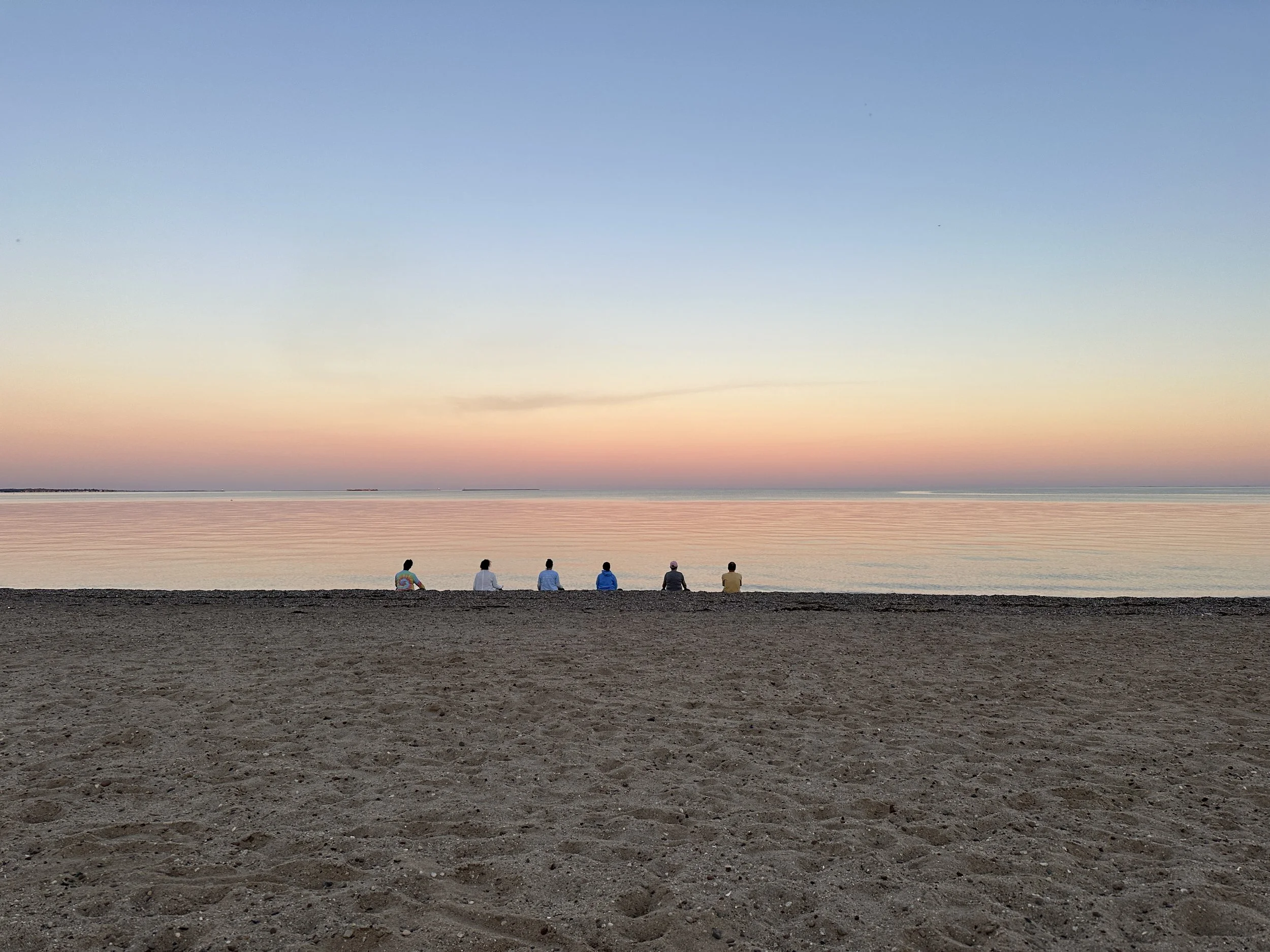
7:00 pm, September 10, 2024 - Woodmont Beach
There is something mildly ridiculous about being a yoga teacher who teaches outside.
I plan the class. I choose the theme. I think about the sequence. I pack the mats and props and speaker and whatever else I need.
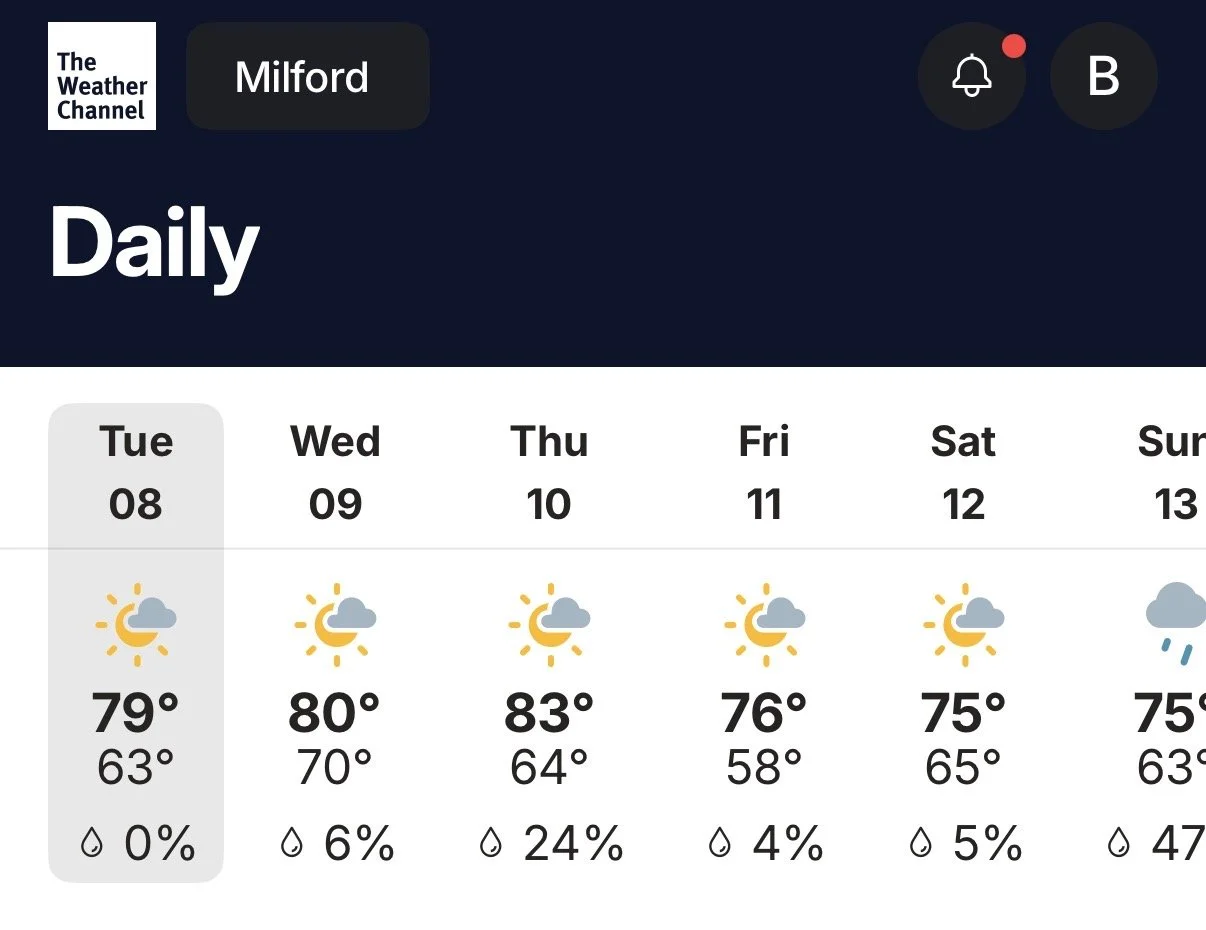
And then I stare at the weather.
Refresh.
Check another app.
Refresh again.
Is that storm actually coming? Is it going north of us? What does 40% chance of rain actually mean? Is the wind going to be a problem? Is it too hot? Is the air quality okay? What does the radar look like at 6:00?
Maybe it’ll pass.
Maybe it won’t.
Maybe I should cancel.
Maybe I should wait another hour.
It would be funny if it weren’t also how I make a living.
And this isn’t new.
Years ago, I ran outdoor programs in Central Park, and it was exactly the same thing. Plans, staffing, schedules, participants—all of it could be dictated by something none of us had any ability to control.
You would think I’d have learned by now.
Instead, apparently, I built a career that repeatedly asks me to practice one of yoga’s most basic lessons:
You cannot control what you cannot control.
The weather is going to weather.
And yet when something outside our control has the power to affect our plans, our work, our income, or other people, it can feel almost impossible to stop watching it.
That’s the part I find interesting.
Because vigilance can feel like control.
If I check the radar often enough, maybe I’ll somehow get ahead of it. If I keep watching the forecast, maybe I can prevent the wrong outcome. If I think through every possible scenario, maybe nothing will catch me off guard.
But paying closer attention to something doesn’t necessarily give me more control over it.
Sometimes it just gives the thing more control over me.
And, yes, I see the irony.
I teach yoga.
I talk about letting go. About staying present. About noticing what is actually happening instead of getting carried away by what might happen. About meeting reality as it is rather than fighting with it.
Then I spend half the afternoon negotiating with a thunderstorm that does not know I exist.
Maybe this is why the practice matters.
Not because yoga teaches us to become people who never worry, never plan, or never check the forecast.
Of course I need to check the weather. I have a responsibility to the people coming to class. Sometimes I need to make a call. Sometimes I need a backup plan.
The practice is noticing the point where useful attention turns into futile vigilance.
I can check the forecast.
I can make the best decision I can with the information I have.
I can communicate clearly.
I can change the plan if the circumstances change.
And then I can stop trying to personally manage the atmosphere.
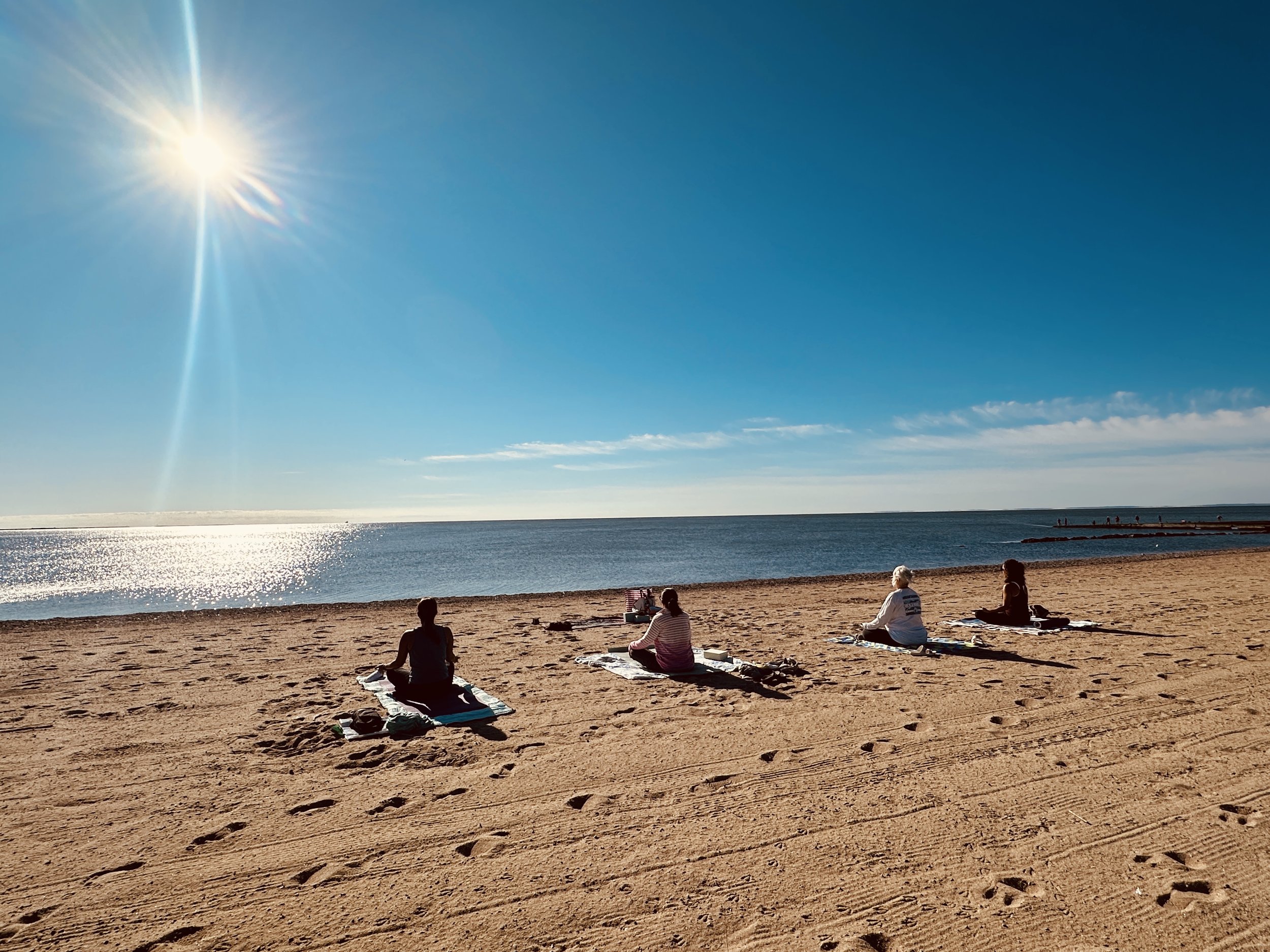
There’s a much bigger lesson in there than beach yoga.
How much energy do we spend monitoring things because they matter to us, even though monitoring them cannot actually change them?
Other people’s reactions.
An outcome we’re waiting for.
A decision someone else has to make.
Traffic.
Timing.
The future.
The weather.
There are things we can influence. There are things we can prepare for. And there are things we simply have to meet when they arrive.
Apparently, after all these years of practicing yoga, I still need the reminder.
So Mother Nature keeps putting it on the schedule.
And I keep teaching on the beach.
