
You Don’t Need an Hour: Why a Short Yoga Practice Still Counts
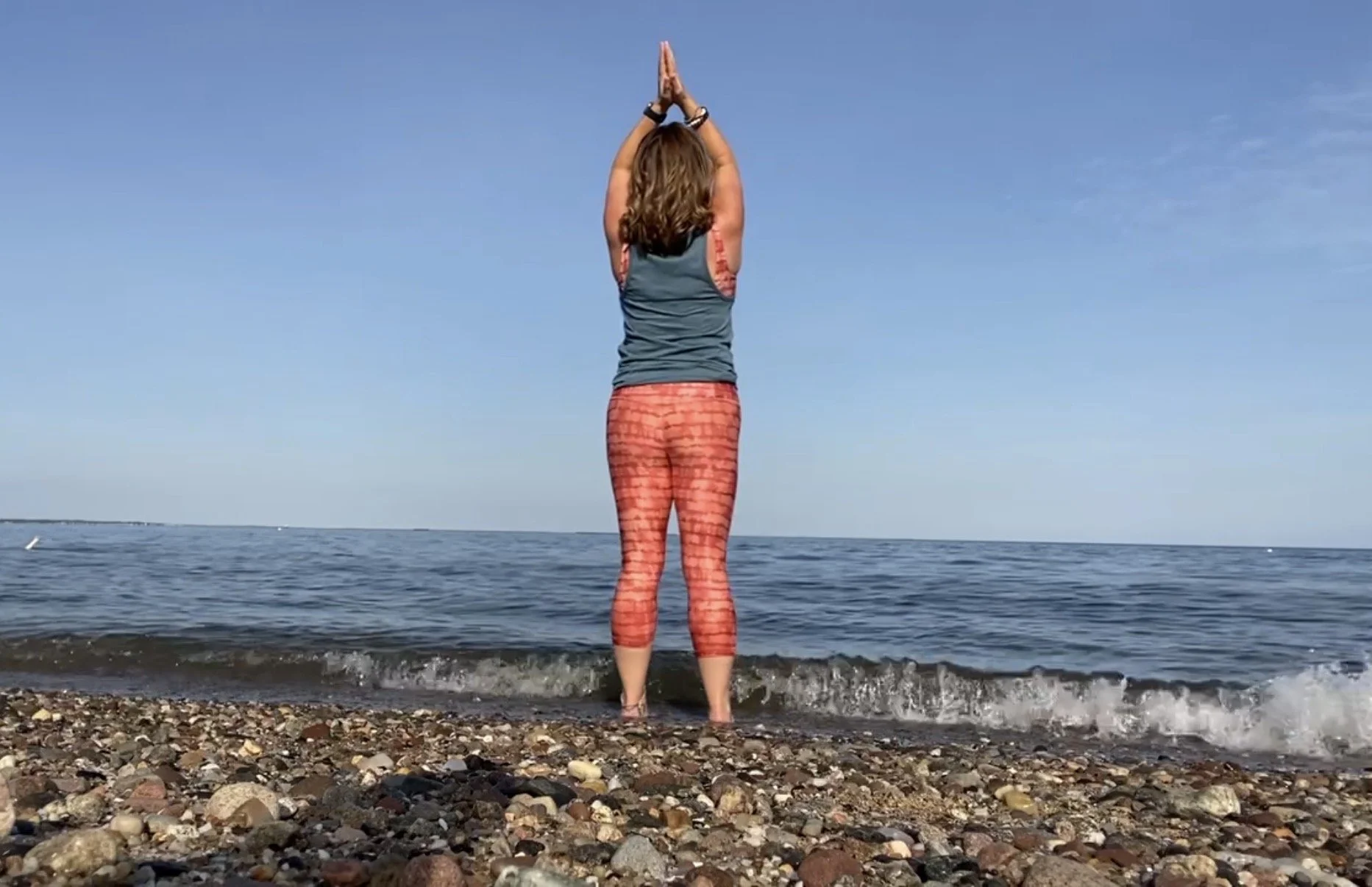
A few deep breaths and moving arms with breath, while feeling grounded - that can be a “full practice”.
There’s an idea many of us carry around about yoga: if we don’t have time for a “full practice”, it’s hardly worth doing at all.
An hour of yoga. A full workout. A long meditation. The perfect morning routine.
And when we don’t have that kind of time - which, for most of us, is often - we do nothing.
Me too. Guilty!
But, a growing body of research suggests something much more encouraging:
A practice doesn’t have to be long to make a difference.
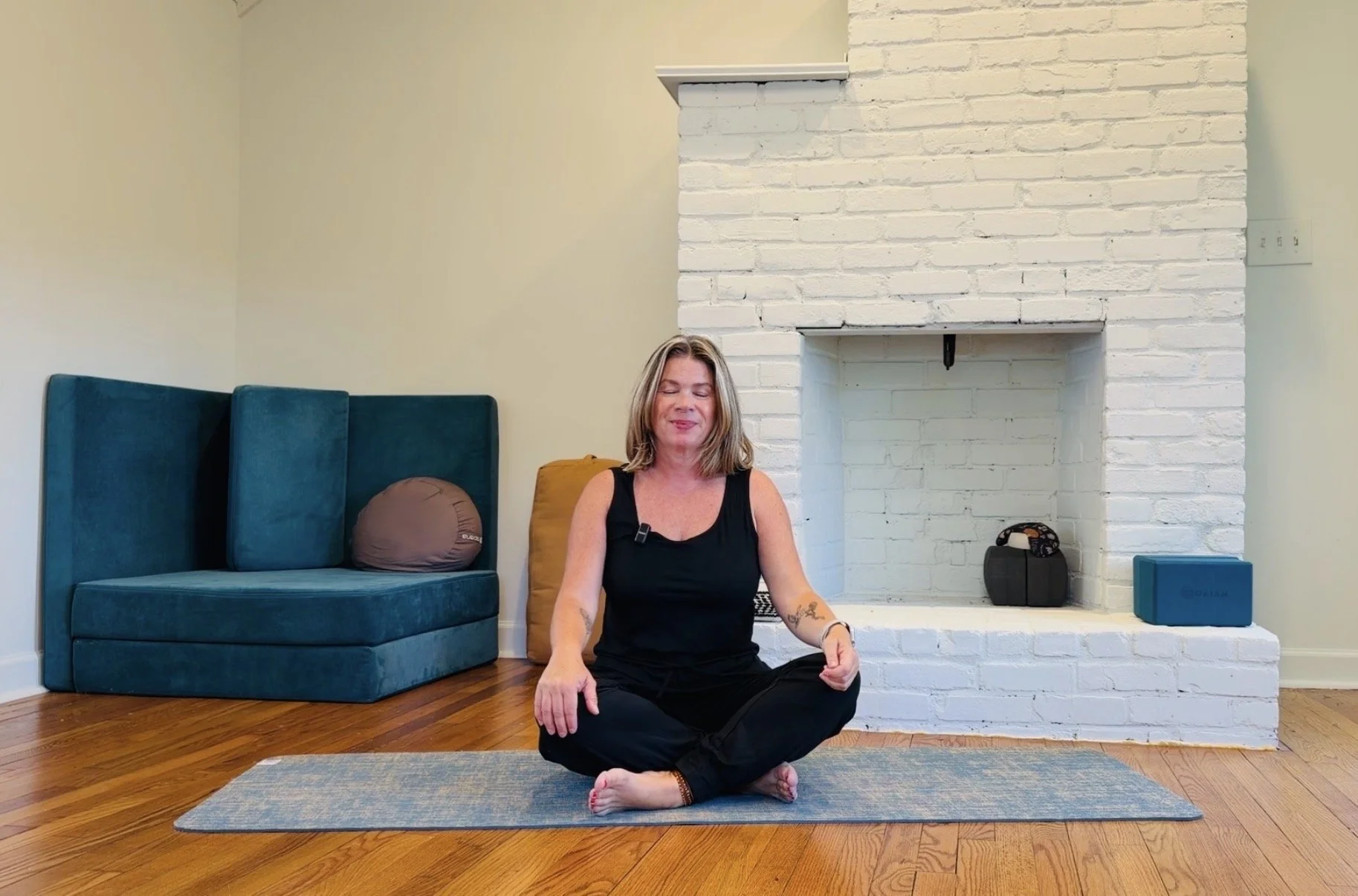
What can happen in 20 minutes?
In one study from the University of Illinois, participants completed a single 20-minute Hatha yoga practice consisting of seated, standing and supine postures followed by meditation and deep breathing. (PS - Hatha yoga is what you do with me, coupled with Tantra which is a somatic practice.)
Immediately afterward, participants performed significantly better on measures of executive function, including working memory and inhibitory control. They were able to maintain focus, process information and respond more accurately.
Even more interesting: on those cognitive tests, participants performed better after the 20 minutes of yoga than they did after 20 minutes of moderate-to-vigorous aerobic exercise.
That doesn’t mean yoga is “better” than aerobic exercise. It tells us something more useful:
Twenty minutes of practice can be enough to measurably change what’s happening in the brain right afterward.

Pugs love Yoga Nidra too.
What about an even shorter practice?
Research on Yoga Nidra - a meditative yogic practice - offers another interesting example.
In a 2025 randomized controlled trial, researchers assigned participants to an 11-minute Yoga Nidra practice, a 30-minute practice, 10 minutes of music, or a waitlist control. The practices were delivered online and were intended to be used regularly over two months.
Compared with the waitlist group, people practicing the 11-minute version showed statistically significant improvements in stress, anxiety, depression and rumination, as well as increased life satisfaction. The effects were small—which is worth saying—but they were measurable.
Researchers also found that more regular use of the 11-minute practice was associated with changes in cortisol patterns, suggesting that consistency may matter even when individual practices are short.
In other words: short and regular can still be meaningful. It’s certainly better for us than waiting for “perfect” and not practicing at all!

And sometimes one practice matters
A 2024 systematic review looked specifically at research on the effects of a single session of yoga, meditation, breathing or related yogic practices on the way healthy adults respond to acute stress.
The research is still developing, and not every study finds the same effects. But that’s part of what makes this area interesting: researchers are no longer only asking whether months of yoga can change us. They’re also investigating what happens in the body and mind after one practice.
And that matters in real life.
Because most of us aren’t deciding between a perfect 60-minute practice and a 20-minute one.
We’re deciding whether to practice at all.
Yoga doesn’t have to become another thing you’re failing to do
This, to me, is the bigger point.
There are mornings when you have 25 minutes. There are days when you have ten. And there may be evenings when two minutes of intentional breathing is what you can manage.
It all counts.
Some days you need movement and energy. Some days you need to feel grounded. Some days your body wants something gentle. Some days you simply need to stop for a moment, breathe and notice what’s happening inside you.
The practice should support the life you’re actually living - not become another standard you’re trying to live up to.
So instead of asking:
Do I have enough time to practice today?
Try asking:
What would help me feel a little better in my body and more present in my life right now?
Then start there.
Sources
Gothe, N., Pontifex, M. B., Hillman, C., & McAuley, E. (2013). The acute effects of yoga on executive function. Journal of Physical Activity and Health, 10(4), 488–495.
Moszeik, E. N., Rohleder, N., & Renner, K. H. (2025). The Effects of an Online Yoga Nidra Meditation on Subjective Well-Being and Diurnal Salivary Cortisol: A Randomised Controlled Trial. Stress and Health, 41(3), e70049.
Mandlik, V., et al. (2024). Effect of a single session of yoga and meditation on stress reactivity: A systematic review. Stress and Health.
