What a Bills Game, a Kids’ Soccer Match and a Stressful Workday Have in Common
Yesterday, the Buffalo Bills were losing.
And I was losing my shit.
If you’re a Bills fan, you probably don’t need further explanation.
But somewhere in the middle of watching the game, I realized that this was actually a pretty perfect example of something I teach all the time.
My nervous system was responding to what was happening in front of me.
My body didn’t particularly care that I wasn’t personally playing football. My heart was beating faster. I was tense. I was reacting to every play.
So I did something very simple.
I took a breath.
Not because a breathing exercise was going to help the Bills win.
But because it could change what was happening inside me while I watched them try.
And that is where yoga gets really interesting to me.

Your nervous system is responding to your real life all day long. Yoga gives us simple tools to change what happens next.
Your nervous system lives in the real world
We tend to talk about nervous-system regulation as though it’s something we practice separately from our lives.
Meditate. Do yoga. Practice breath work. Take a bath. Calm down.
But your nervous system isn’t only operating when you’re sitting quietly on a yoga mat.
It’s operating when your kid misses a shot.
When the referee makes a terrible call.
When your boss says, “Can we talk?”
When you look at your calendar and realize there is absolutely no space in it.
When you’re already late and someone can’t find their shoes.
When your phone rings.
When you open an email you weren’t expecting.
When the Bills are down in the fourth quarter.
Different situations. Different stakes.
But in every one of them, your body is receiving information and responding to it.
Sometimes before your thinking brain has caught up.

Any idea how insane it is to be the goal keeper’s mom, and there’s penalty kicks to win or lose?!
Something happens. Your body REACTS. Then what?
We often think of our reactions as personality.
I’m impatient.
I’m an anxious person.
I’m just really competitive.
I’m terrible with stress.
But there’s something happening underneath the story.
Your nervous system is constantly assessing what’s happening around you and adjusting your body accordingly.
Your heart rate can change. Your breathing can change. Your muscles can tense. Your attention can narrow. Your body can prepare to do something.
That’s useful.
We want a nervous system capable of responding.
The problem is that sometimes the REACTION is much bigger than the moment requires, or we react before we’ve had an opportunity to decide how we actually want to behave.
Ask any parent who has yelled something from the sidelines and regretted it approximately four seconds later.
I’ve been that parent.
And understanding what’s happening in my body has changed the way I handle those moments.
Not perfectly.
But differently.
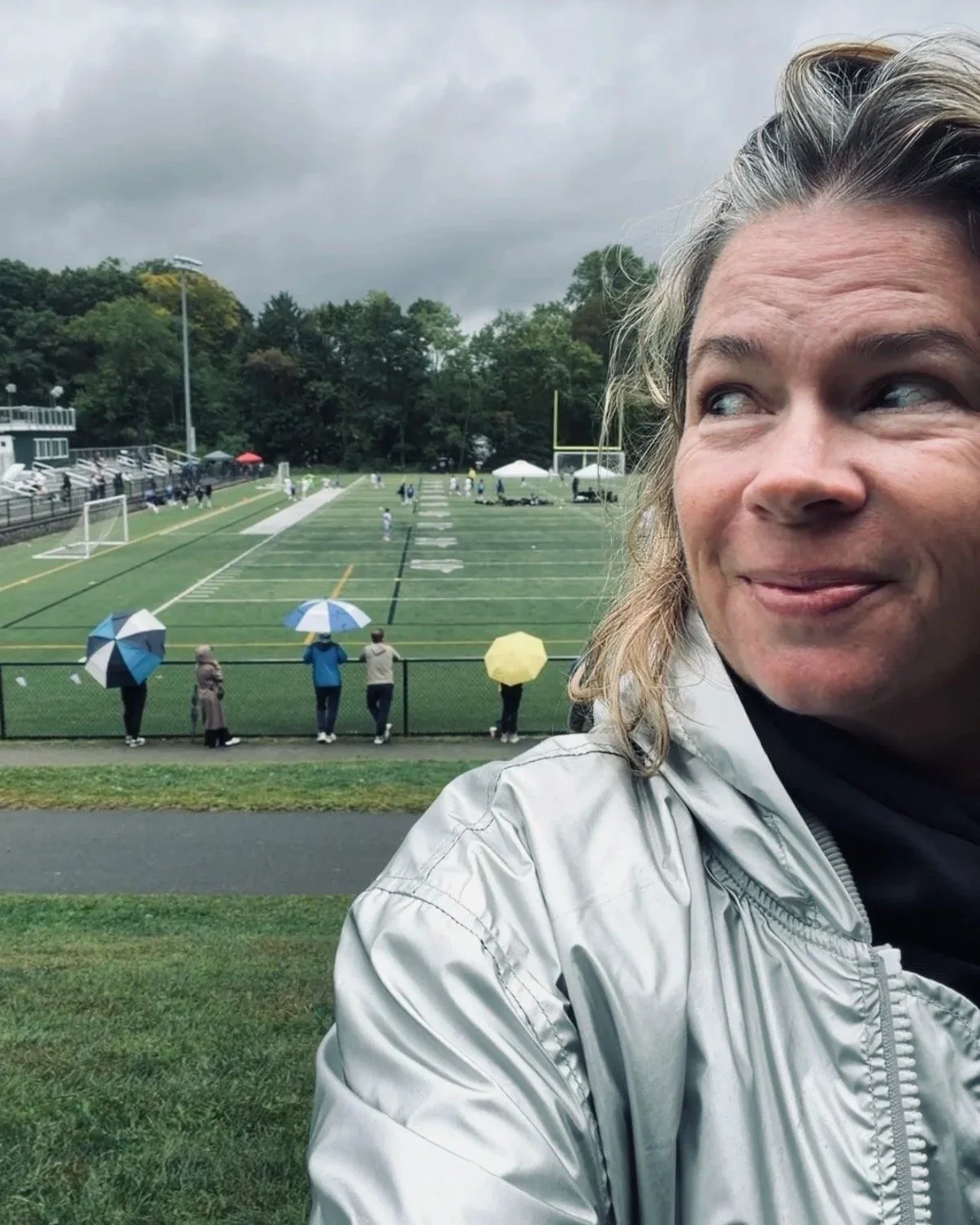
Parents from the other team screaming at their kids and the ref. I have been this parent. Not that long ago in fact. But I learned what was happening and have been working hard to change. Their behavior was activating me, so I walked away from them and watched from somewhere else so I didn’t become dysregulated, too.
This is where yoga leaves the mat
This is the yoga I’m increasingly interested in teaching.
Not how deeply you can get into a pose.
Not whether you can touch your toes.
Not even whether you can carve out an hour for a yoga class.
I’m interested in whether you can notice what’s happening inside yourself while your actual life is happening.
Because once you notice it, you have options.
And some of those options are incredibly simple.
Feel your feet on the ground.
Make your exhale a little longer.
Unclench something you’ve been gripping.
Move your body.
Shake out some of that activation.
Look around and actually notice where you are.
Take one breath before you speak.
None of those things require yoga pants, a mat or an hour of free time.
They’re yoga tools you can use in your life.
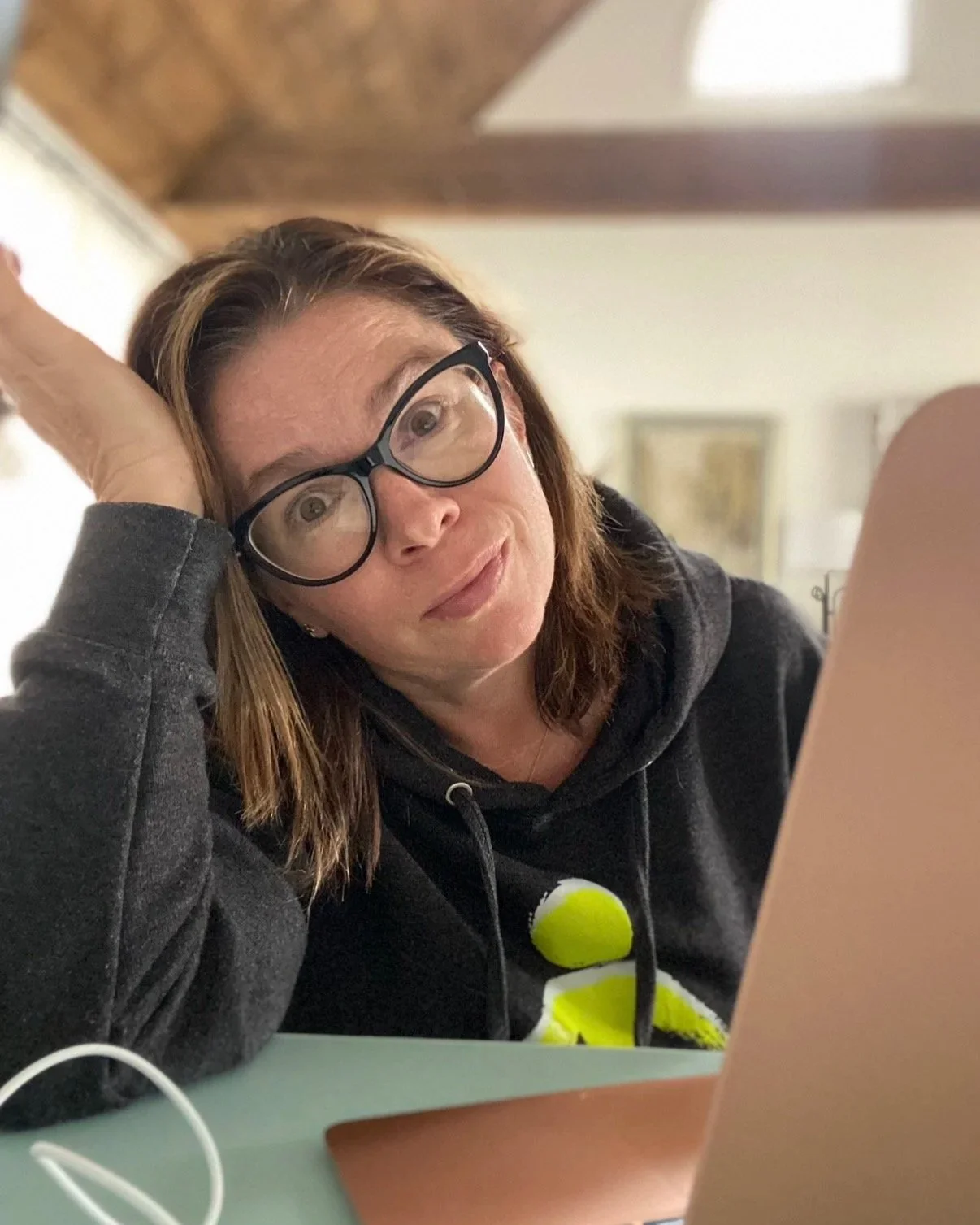
Even just an email worded a certain way can send out nervous systems into a spiral that throws everything off all day. Pause and notice what it feels like in your body. Does it deserve the power to derail your whole day?
The goal isn’t to be calm all the time
This distinction matters to me.
Nervous-system regulation does not mean walking around in some permanently blissed-out state where nothing bothers you.
I don’t want to watch a Bills game without caring who wins.
I don’t want to watch my kids play sports and feel nothing.
I don’t want to become indifferent to things that matter to me.
Regulation isn’t the absence of emotion or activation.
It’s developing a greater capacity to notice what is happening and work with it instead of automatically being run by it.
Sometimes you need to settle.
Sometimes you need to move.
Sometimes you need to shake.
Sometimes you need strength.
Sometimes you need rest.
Sometimes you just need enough space between what happened and what you do next to make a different choice.
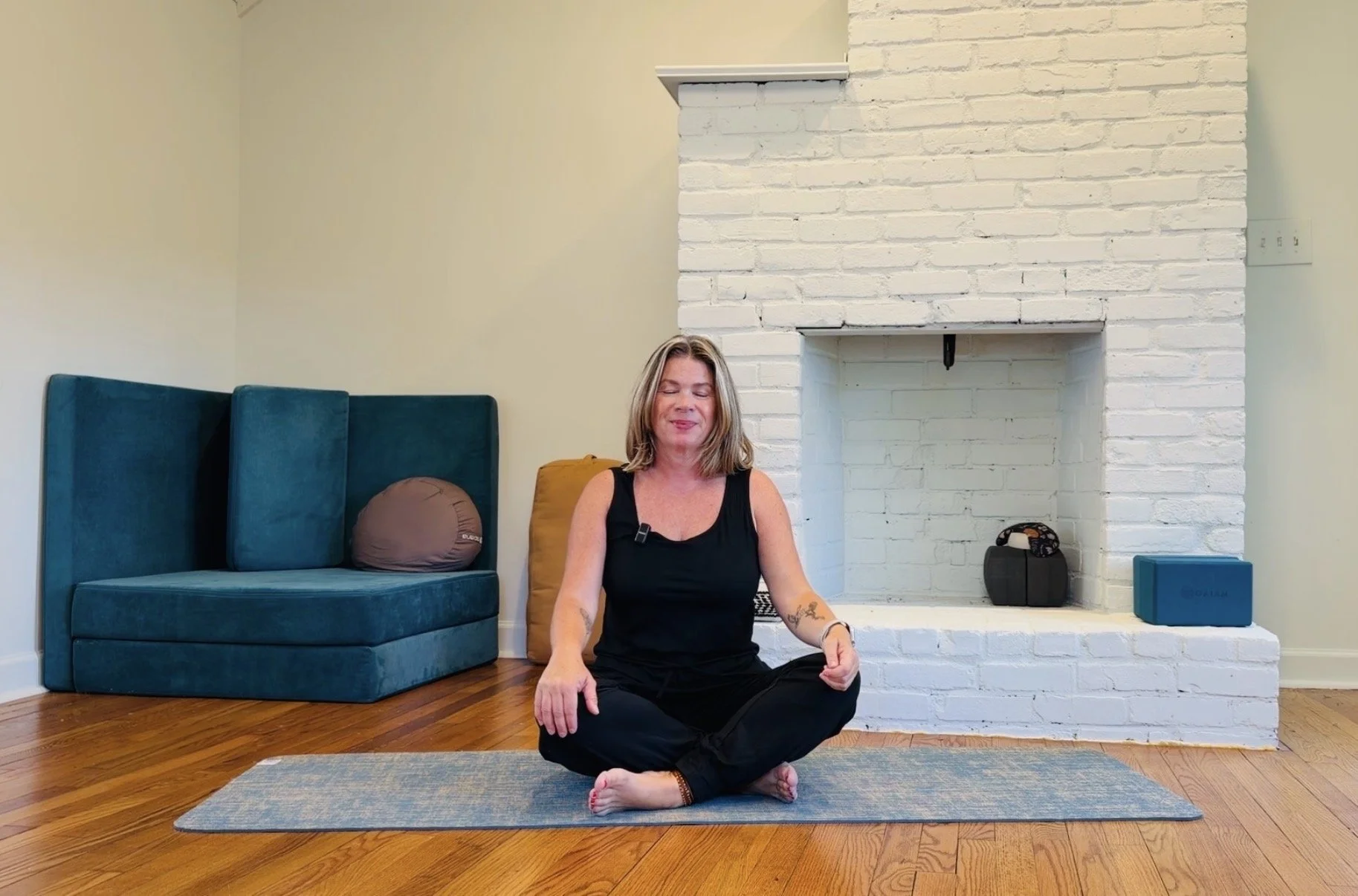
That’s why I teach yoga the way I do.
It’s also why I’ve become less interested in asking:
“What workout should I do today?”
and more interested in asking:
“What’s happening inside me right now — and what do I need?”
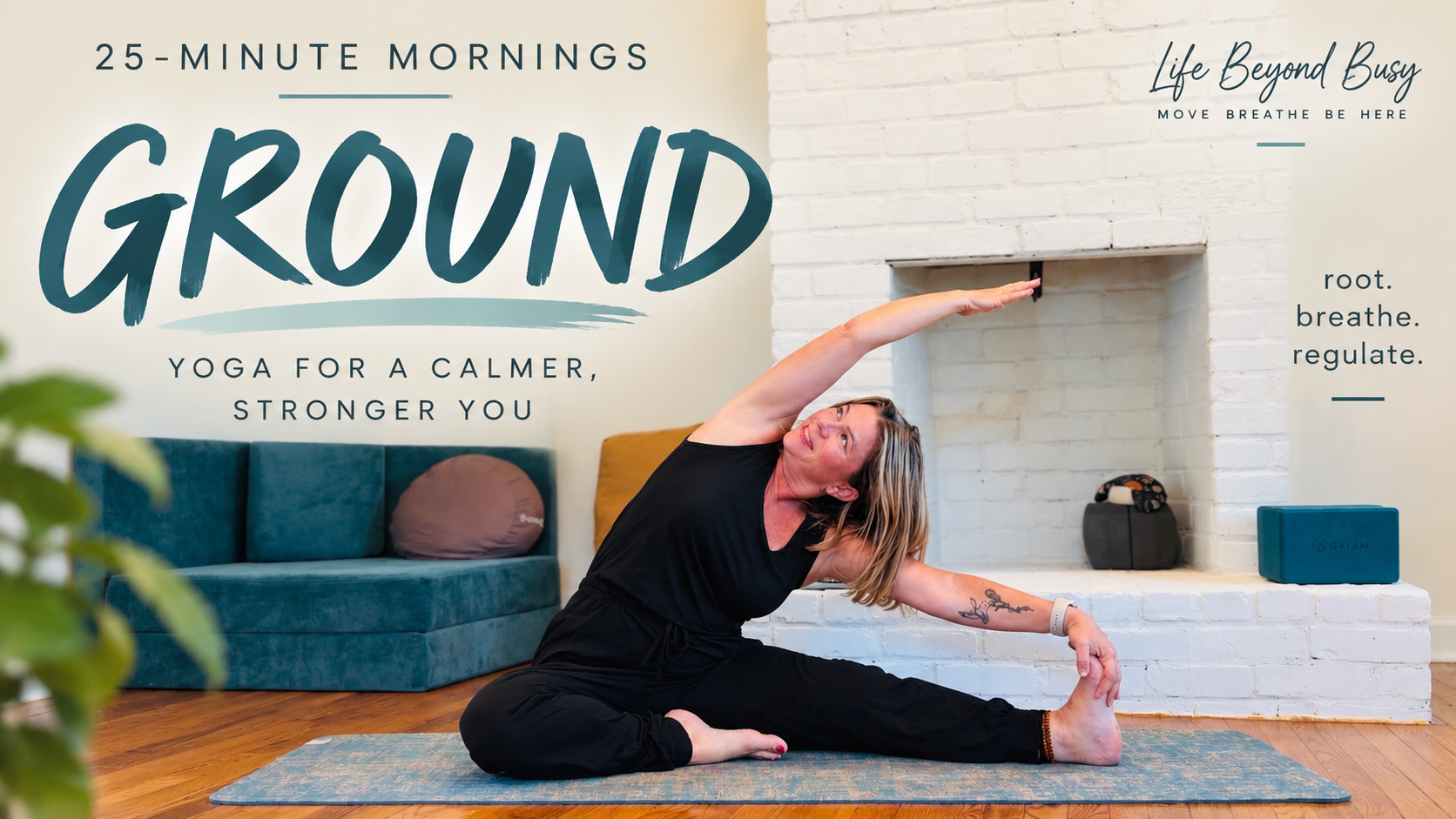
That’s the thinking behind my 25-Minute Mornings practices.
GROUND when you need steadiness.
RESET when you need to shift.
RELEASE when you need to unload.
RESTORE when you need to replenish.
ENERGIZE when you need to wake up.
EMPOWER when you need strength and agency.
UNWIND when you need to quiet the noise.
The practice changes because you change.
And the point isn’t to become better at yoga.
It’s to use yoga to become more skillful at being you, in your actual life.
At work.
At home.
On the sidelines.
In traffic.
During the fourth quarter.
Especially during the fourth quarter.

Go Bills!
Next week: What stress is actually doing in your body
This is Part One of a two-part series about the nervous system, stress and yoga.
In Part Two, I’ll look more closely at what happens when our bodies activate in response to stress, why modern life can make recovery difficult, and why I’ve become so intentional about building activation and recovery into my yoga practices.
It took me a long time — and more than one period when my body essentially forced me to stop — to understand that recovery isn’t something we earn after everything else gets done.
It’s part of the circuit.
And learning to complete that circuit has changed the way I practice, the way I teach and the way I live.
Want to experience it instead of just reading about it?
A free 25-minute practice designed to help you reconnect with your body, build steadiness and notice what it feels like to be supported.